

Over 80 percent of shoppers now choose to score Black Friday deals online instead of in crowded stores. This shift has turned a once chaotic, in-person event into a major digital battleground for e-commerce brands. With consumer habits and retailer tactics evolving each year, understanding the trends behind this shopping phenomenon can be the difference between missing out and meeting record sales.
Table of Contents
- Understanding Black Friday And E-Commerce Trends
- Types Of Black Friday Deals And Strategies
- Leveraging Data Analysis To Drive Sales
- Optimizing Marketing And Store Readiness
- Common Black Friday Pitfalls To Avoid
Key Takeaways
| Point | Details |
|---|---|
| Shift to E-Commerce | 80% of consumers prefer online shopping for convenience and better deals, requiring businesses to adapt their retail strategies. |
| Psychological Factors | Consumer engagement on Black Friday is driven by emotions beyond discounts, such as social involvement and the thrill of bargain hunting. |
| Data-Driven Strategies | Utilizing data analysis for customer segmentation and inventory management can enhance sales performance during Black Friday. |
| Avoiding Pitfalls | Merchants must address potential risks like cybersecurity threats and website performance to ensure a successful sales event. |
Understanding Black Friday and E-Commerce Trends
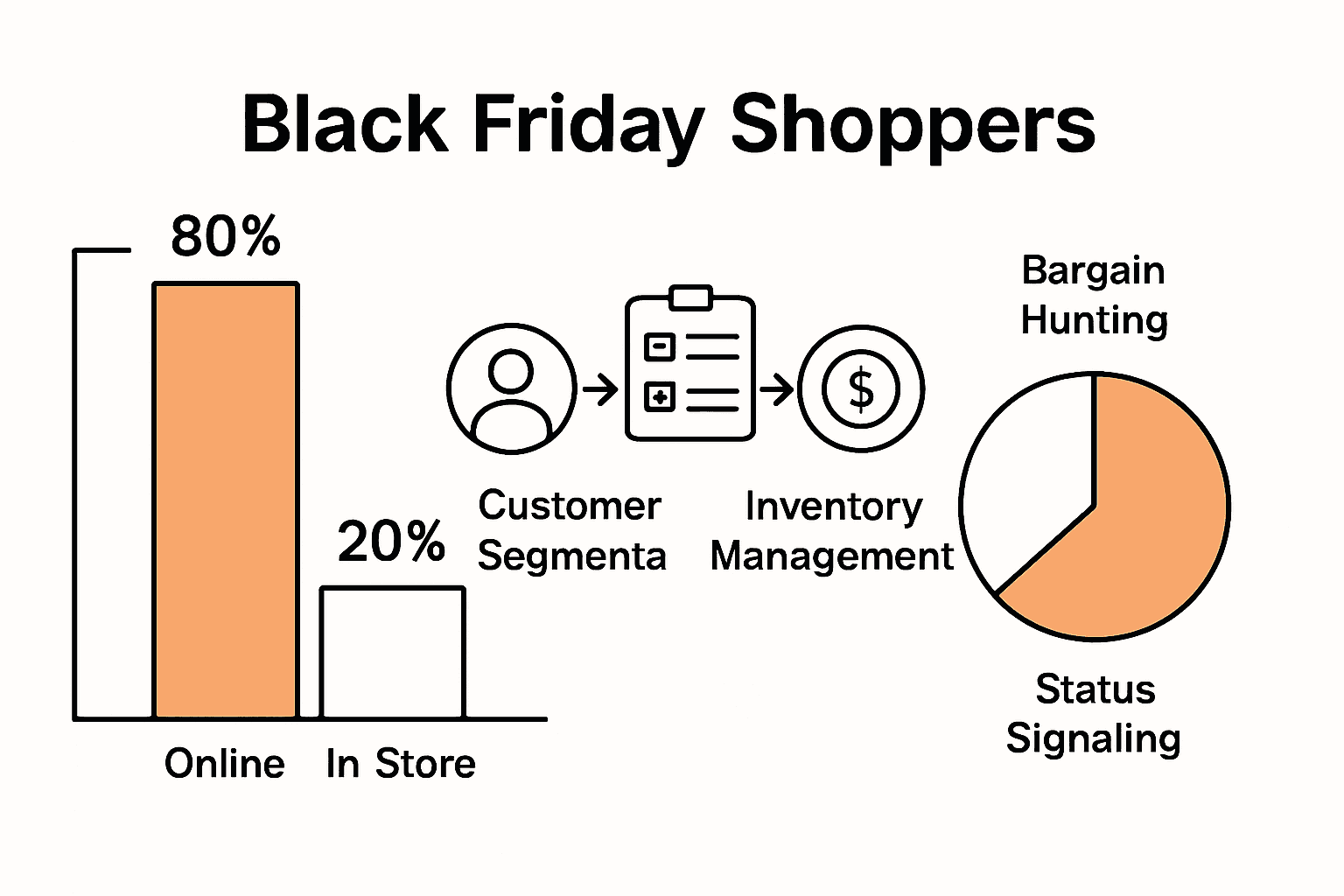
Black Friday has transformed from a single-day shopping event into a complex digital phenomenon that reshapes retail strategies and consumer behaviors. According to research from AllCommerceJournal, an astounding 80% of consumers now prefer online shopping, driven primarily by convenience (40%) and superior deals (30%). This massive shift signals a fundamental change in how people approach holiday shopping.
The psychological underpinnings of Black Friday are fascinating. Research from DrPress reveals that consumer participation is motivated by more than just financial savings. Shoppers are driven by complex psychological factors including:
- Bargain hunting: The thrill of finding exceptional deals
- Social comparison: Desire to participate in a widespread cultural event
- Status signaling: Purchasing trending or high-value products
For e-commerce merchants, Black Friday represents a critical revenue opportunity. The economic impact extends beyond individual transactions - 75% of consumers recognize these sales events as beneficial for retailers, creating a robust ecosystem of economic growth and job creation. Strategic preparation is no longer optional but essential for businesses looking to capitalize on this massive shopping event.
Black Friday Strategy: Essential Guide for Sellers offers deeper insights into navigating this complex landscape. Understanding trends, consumer psychology, and digital shopping behaviors will be your greatest asset in transforming Black Friday from a single day of sales into a comprehensive revenue generation strategy.
Types of Black Friday Deals and Strategies
Black Friday has evolved far beyond traditional discount models, with sophisticated retailers leveraging complex marketing techniques to drive sales and engagement. According to research on marketing strategies, hunger marketing has become a powerful approach in creating consumer excitement. Wikipedia defines this as a strategy that intentionally targets human emotions by artificially creating limited supply and strategic pricing, which encourages impulsive purchasing decisions.
E-commerce merchants can implement several strategic deal types to maximize Black Friday revenue:
- Flash Sales: Limited-time offers creating immediate urgency
- Bundle Deals: Combining complementary products at attractive prices
- Tiered Discounts: Increasing savings based on purchase volume
- Early Bird Specials: Rewards for early shoppers
- Exclusive Online Deals: Digital-only promotions
Interestingly, sophisticated retailers also utilize demarketing strategies to manage consumer demand. Wikipedia outlines various sophisticated approaches including price discrimination, bait and switch tactics, and strategic stock management. These techniques help businesses control demand, optimize inventory, and create perceived value.
7 Types of Ecommerce Promotions to Boost Sales can provide additional insights into crafting compelling Black Friday strategies. The key is understanding that modern consumers seek more than just discounts - they want unique, personalized shopping experiences that make them feel valued and excited.
Leveraging Data Analysis to Drive Sales
Data analysis has become the cornerstone of successful e-commerce strategies, transforming how businesses approach Black Friday sales. Research from arXiv highlights the power of advanced recommendation systems, demonstrating how sophisticated algorithms can dramatically enhance user experience and drive sales through personalized insights.
Key data analysis strategies for Black Friday success include:
- Customer Segmentation: Breaking down your audience into precise groups
- Purchase Pattern Analysis: Identifying trending products and buying behaviors
- Predictive Inventory Management: Forecasting demand to optimize stock levels
- Conversion Funnel Optimization: Tracking and improving customer journey touchpoints
- Real-time Performance Monitoring: Tracking sales metrics during the event
Interestingly, research from arXiv reveals the critical role of intermediaries in social e-commerce, showing how data analysis can help businesses act as local trend detectors. These insights allow merchants to understand consumer behavior beyond traditional metrics, creating more nuanced and effective sales strategies.
Sales Analysis Guide: Strategies and Best Practices for 2025 provides deeper insights into transforming raw data into actionable strategies. By embracing data-driven approaches, e-commerce businesses can move from reactive selling to proactive, intelligent revenue generation that anticipates and meets customer needs before they even realize them.

Optimizing Marketing and Store Readiness
Black Friday represents a critical revenue opportunity for e-commerce brands, with global online sales reaching remarkable heights. According to Euromonitor, the Black Friday period accounted for 12% of Amazon’s overall e-commerce sales across 15 countries in 2023, underscoring the immense potential of strategic marketing preparation.
Key marketing optimization strategies include:
- Pre-Event Teaser Campaigns: Building anticipation before Black Friday
- Personalized Email Marketing: Segmenting audiences for targeted messaging
- Social Media Countdown: Creating engagement and excitement
- Limited-Time Offer Previews: Generating early interest
- Multichannel Marketing Approach: Integrating platforms for maximum reach
Research from Grepsr highlights an 8% year-over-year increase in global online sales, emphasizing the importance of AI-driven personalized shopping experiences. Successful merchants leverage consumer data to create seamless, targeted interactions that convert browsers into buyers.
Better Marketing Guide: Strategies for Success in 2025 offers deeper insights into crafting compelling marketing approaches. The key is transforming your online store from a simple sales platform to an immersive, customer-centric experience that anticipates and exceeds shopper expectations during the high-stakes Black Friday period.
Common Black Friday Pitfalls to Avoid
Black Friday presents unique challenges for e-commerce merchants, with potential risks that can derail even the most carefully planned sales strategy. Cybersecurity emerges as a critical concern during these high-traffic periods. Research from arXiv reveals a hybrid analytical framework demonstrating recurrent cyberattack spikes during peak shopping seasons, highlighting the urgent need for proactive digital protection.
Common Black Friday pitfalls that merchants must strategically avoid include:
- Inventory Miscalculation: Overselling or underselling critical products
- Website Performance Failures: Slow loading times or complete site crashes
- Inadequate Cybersecurity Measures: Leaving systems vulnerable to attacks
- Poor Customer Support Preparation: Insufficient staffing during peak demand
- Pricing Strategy Errors: Inconsistent or confusing discount structures
Research from arXiv underscores the significant risks of cyber-crime, emphasizing that digital forensics and robust security measures are not optional but essential. The potential damage extends beyond immediate financial loss, potentially destroying customer trust and long-term brand reputation.
Black Friday Shopify: Complete Guide to Success provides comprehensive strategies for navigating these challenges. Successful merchants treat Black Friday preparation as a holistic process, anticipating potential problems and developing comprehensive contingency plans that protect both their revenue and their customers’ experience.
Master Your Black Friday Sales with Data-Powered Insights
Preparing for Black Friday means overcoming challenges like inventory miscalculations and complex pricing strategies while meeting rising customer expectations for personalized experiences. If you want to unlock hidden revenue streams and maximize your average order value, understanding product relationships and consumer behavior is essential. Platforms that leverage AI-driven market basket analysis, like APUS NEST, can give you the edge you need to craft smarter bundles and cross-sell offers based on real sales data.
Ready to turn your Black Friday sales into your most profitable yet Discover how APUS NEST helps Shopify and WooCommerce store owners analyze sales data effortlessly. Start with a free report to see initial pairing opportunities and upgrade for full access to detailed recommendations. Visit APUS NEST now and transform your Black Friday strategy through powerful data insights and actionable guidance. Take control and watch your revenue grow this season.
Frequently Asked Questions
What are effective strategies to maximize Black Friday sales for e-commerce stores?
To maximize Black Friday sales, e-commerce stores should implement strategies such as flash sales to create urgency, bundle deals to encourage larger purchases, tiered discounts for customer loyalty, early bird specials to reward timely shoppers, and exclusive online deals to attract digital consumers.
How can data analysis improve Black Friday marketing strategies?
Data analysis can enhance Black Friday strategies by segmenting customers for targeted offers, analyzing purchase patterns to focus on trending products, predicting inventory needs to avoid stockouts, optimizing the customer conversion funnel, and monitoring sales performance in real-time to make immediate adjustments.
What are the most common pitfalls to avoid during Black Friday sales?
Common pitfalls during Black Friday include inventory miscalculations which can lead to overselling or stockouts, website performance issues like slow loading times, inadequate cybersecurity measures that expose the business to cyberattacks, poor customer support during peak times, and confusing pricing strategies that can frustrate customers.
How important is cybersecurity during Black Friday sales events?
Cybersecurity is crucial during Black Friday sales due to increased online traffic, which attracts cybercriminals. Businesses must implement robust security measures to protect customer data and maintain trust, as breaches can lead to significant financial loss and damage to reputation.
Recommended
- Black Friday Strategy: Essential Guide for Sellers - ApusNest Blog | ApusNest
- Black Friday Shopify: Complete Guide to Success - ApusNest Blog | ApusNest
- 7 Top Black Friday Shopify Apps to Boost Store Profits - ApusNest Blog | ApusNest
- Black Friday Advice to Maximize E-Commerce Revenue - ApusNest Blog | ApusNest
