

Ecommerce growth is speeding up, and online businesses are working hard to stay one step ahead. Surprise, though. Companies using advanced data analytics are 23 times more likely to get new customers and 6 times better at keeping them. Most people think it’s all about more ads or fancier websites, but the big wins actually come from understanding customers, smart use of tech, and being ready to shift fast when trends change.
Table of Contents
- What Are Ecommerce Growth Strategies And Why They Matter?
- The Role Of Data Analysis In Ecommerce Growth
- Understanding Customer Experience In Ecommerce Success
- How Marketing Channels Impact Ecommerce Growth
- Trends Shaping The Future Of Ecommerce Strategies
Quick Summary
| Takeaway | Explanation |
|---|---|
| Implement data-driven decisions | Utilize analytics to guide strategies and make informed decisions that enhance growth and customer acquisition. |
| Focus on customer experience optimization | Prioritize seamless navigation and responsive support to convert visitors into loyal customers effectively. |
| Integrate multiple marketing channels | Combine various digital channels to maximize brand visibility and engage a broader audience for better results. |
| Adopt advanced technologies | Leverage AI, AR, and predictive analytics to personalize shopping experiences and stay ahead of evolving consumer expectations. |
| Embrace sustainability practices | Ensure ethical sourcing and sustainable practices as these are becoming vital to consumer purchase decisions in the digital marketplace. |
What Are Ecommerce Growth Strategies and Why They Matter?
Ecommerce growth strategies are systematic approaches that online businesses use to expand revenue, increase market share, and optimize performance across digital sales channels. Unlike traditional business expansion methods, these strategies leverage digital technologies, data analytics, and customer insights to drive sustainable growth.
The Core Purpose of Ecommerce Growth Strategies
At their fundamental level, ecommerce growth strategies are about transforming raw business potential into measurable results. Our guide on maximizing revenue highlights that successful strategies go beyond simple sales tactics. They represent a holistic approach to understanding customer behavior, market dynamics, and technological opportunities.
Key characteristics of effective ecommerce growth strategies include:
- Data-driven decision making
- Customer-centric approach
- Continuous optimization and experimentation
- Multi-channel integration
- Scalable and adaptable frameworks
Strategic Dimensions of Ecommerce Growth
Successful ecommerce growth strategies typically operate across multiple strategic dimensions. According to Deloitte’s Digital Commerce Research, modern businesses must think beyond traditional sales metrics.
These strategies encompass critical areas such as:
- Customer acquisition optimization
- Conversion rate enhancement
- Average order value improvement
- Customer retention and loyalty programs
- Product portfolio expansion
Ultimately, ecommerce growth strategies are not just about selling more products. They represent a sophisticated approach to understanding market dynamics, customer psychology, and technological capabilities.
The table below summarizes the core strategic dimensions and their specific focus areas mentioned for successful ecommerce growth strategies.
| Strategic Dimension | Focus Area |
|---|---|
| Customer Acquisition Optimization | Attracting new customers |
| Conversion Rate Enhancement | Increasing the percentage of visitors who buy |
| Average Order Value Improvement | Encouraging higher spend per transaction |
| Customer Retention and Loyalty | Building repeat business and loyalty programs |
| Product Portfolio Expansion | Broadening range of products offered |
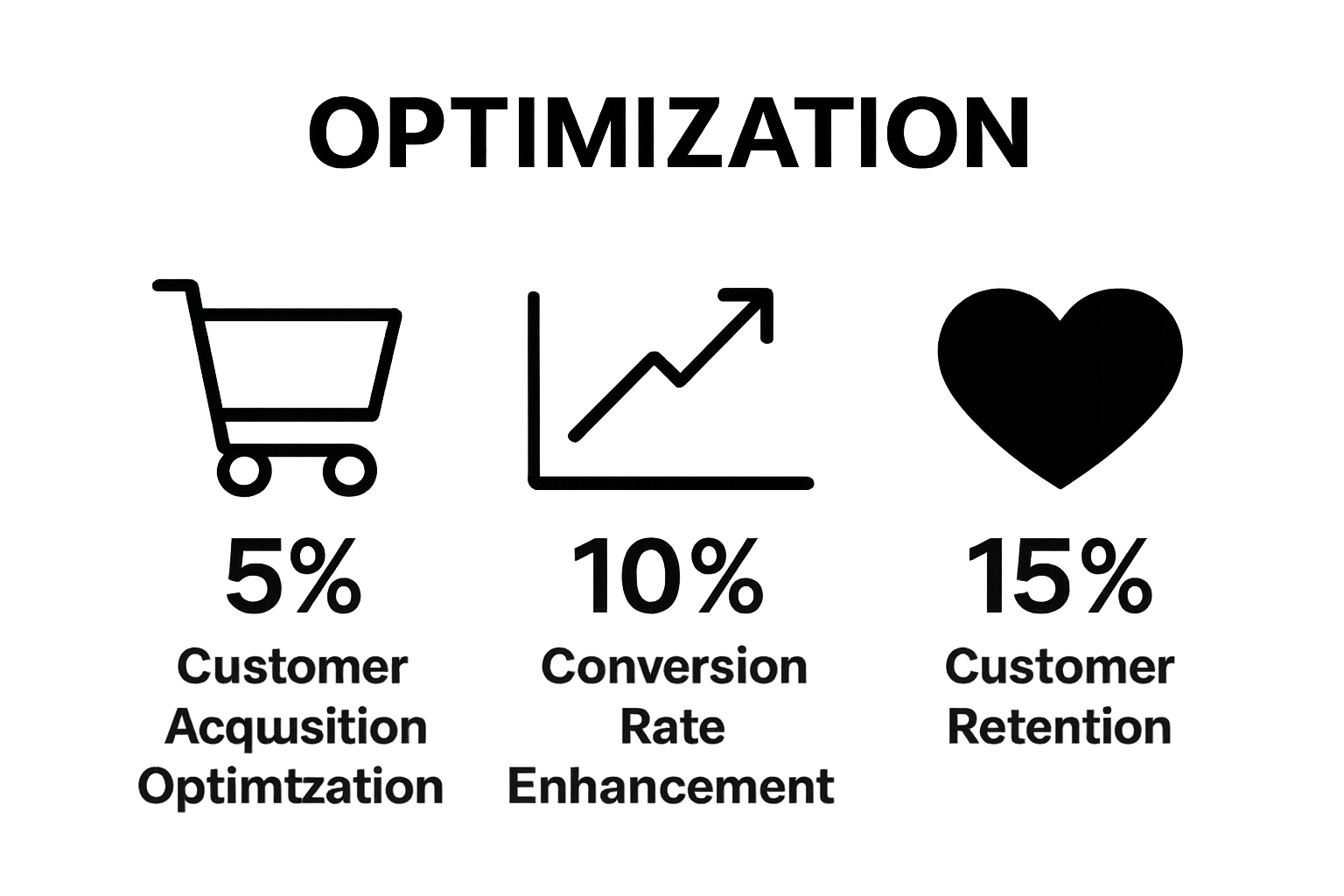 By integrating data analytics, user experience design, and targeted marketing techniques, businesses can create robust frameworks that drive sustainable digital commerce success.
The Role of Data Analysis in Ecommerce Growth
Data analysis serves as the critical compass guiding ecommerce businesses through complex digital landscapes, transforming raw information into actionable strategic insights. Our guide to e-commerce data analysis reveals that modern online businesses cannot rely on intuition alone when making critical growth decisions.
Understanding Data Analysis in Digital Commerce
Ecommerce data analysis involves systematically collecting, processing, and interpreting digital metrics to uncover patterns, trends, and opportunities for business enhancement. According to McKinsey Digital Insights, businesses that leverage advanced data analytics are 23 times more likely to acquire customers and 6 times more likely to retain them.
Key components of effective ecommerce data analysis include:
- Customer behavior tracking
- Conversion funnel optimization
- Revenue performance measurement
- Predictive trend forecasting
- Segmentation and personalization strategies
Strategic Impact of Data-Driven Insights
Data analysis transcends mere number crunching. It provides a sophisticated framework for understanding complex customer interactions, market dynamics, and potential growth opportunities. By interpreting transactional data, browsing patterns, and customer feedback, ecommerce businesses can make precise, targeted decisions that directly impact revenue and market positioning.
Advanced data analysis techniques enable businesses to:
- Identify high-performing product combinations
- Predict customer purchasing behaviors
- Optimize pricing and promotional strategies
- Minimize customer acquisition costs
- Enhance overall user experience
In the rapidly evolving digital marketplace, data analysis is no longer optional—it is a fundamental requirement for sustainable growth and competitive advantage.
Understanding Customer Experience in Ecommerce Success
Customer experience represents the comprehensive journey a shopper undergoes while interacting with an online store, encompassing every digital touchpoint from initial website discovery to post purchase support. Our guide on ecommerce conversion strategies emphasizes that exceptional customer experience is no longer a luxury but a fundamental business requirement in digital commerce.
The Multidimensional Nature of Digital Customer Experience
Customer experience in ecommerce extends far beyond simple transactional interactions. According to Gartner’s Customer Experience Research, 86% of buyers are willing to pay more for superior customer experiences, highlighting its critical strategic importance.
Key dimensions of outstanding digital customer experiences include:
- Seamless website navigation
- Intuitive product discovery
- Personalized recommendations
- Transparent pricing and policies
- Responsive customer support
Strategic Implications of Customer Experience
Effective customer experience management transforms casual browsers into loyal customers. It involves understanding and anticipating customer needs through sophisticated data analysis, user interface design, and continuous feedback integration. By creating frictionless, engaging digital interactions, businesses can differentiate themselves in increasingly competitive online marketplaces.
Critical components of customer experience optimization involve:
- Reducing checkout complexity
- Implementing user-friendly design
- Providing omnichannel support
- Ensuring mobile responsiveness
- Creating personalized communication channels
Ultimately, customer experience is a strategic investment that directly impacts revenue, customer retention, and long term brand perception in the digital marketplace.

How Marketing Channels Impact Ecommerce Growth
Marketing channels serve as strategic conduits connecting businesses with potential customers, transforming digital interactions into measurable revenue opportunities. Our growth marketing strategy guide reveals that successful ecommerce businesses leverage multiple interconnected channels to create comprehensive customer engagement ecosystems.
The Ecosystem of Digital Marketing Channels
Modern marketing channels represent far more than simple communication pathways. According to Research Gate’s Digital Marketing Study, utilizing diverse marketing channels increases brand visibility and enables businesses to effectively reach segmented customer groups.
Key digital marketing channels that drive ecommerce growth include:
- Search engine marketing
- Social media advertising
- Email marketing campaigns
- Content marketing platforms
- Affiliate marketing networks
Strategic Channel Integration and Performance
Successful marketing channel strategies go beyond individual platform tactics. They require sophisticated integration, cross-channel data analysis, and continuous optimization. By understanding each channel’s unique strengths and audience characteristics, ecommerce businesses can create synchronized marketing approaches that maximize customer acquisition and retention.
Critical considerations for effective marketing channel management involve:
- Consistent brand messaging across platforms
- Targeted audience segmentation
- Performance tracking and analytics
- Adaptive marketing strategies
- Cost-effective channel investment
Ultimately, marketing channels are not isolated tactics but interconnected strategic assets that collectively drive sustainable ecommerce growth and customer engagement.
Here is a comparison table outlining key digital marketing channels for ecommerce growth along with their primary strategic benefits.
| Marketing Channel | Primary Benefit |
|---|---|
| Search Engine Marketing | Boosts visibility and search traffic |
| Social Media Advertising | Drives engagement and awareness |
| Email Marketing Campaigns | Nurtures leads and fosters loyalty |
| Content Marketing | Educates and attracts customers |
| Affiliate Marketing | Expands reach through partnerships |
Trends Shaping the Future of Ecommerce Strategies
Ecommerce strategies are rapidly evolving, driven by technological innovations, changing consumer behaviors, and global market dynamics. Our ecommerce tips for 2025 highlight the critical need for businesses to stay ahead of emerging trends that are fundamentally reshaping digital commerce landscapes.
Technological Disruption in Digital Commerce
The future of ecommerce is being defined by transformative technological capabilities that redefine customer interactions and business operations. According to Forrester’s Future of Commerce Report, sustainable practices and ethical sourcing are increasingly influencing consumer purchasing decisions, signaling a profound shift in strategic priorities.
Key technological trends revolutionizing ecommerce include:
- Artificial intelligence powered personalization
- Augmented reality shopping experiences
- Advanced predictive analytics
- Blockchain enabled transparency
- Voice commerce integration
Strategic Adaptation and Consumer Expectations
Successful ecommerce businesses must not merely adopt new technologies but fundamentally reimagine their approach to customer engagement. This requires a holistic understanding of emerging consumer expectations, which increasingly emphasize seamless experiences, ethical practices, and personalized interactions.
Critical strategic considerations for future ecommerce success involve:
- Hyper personalized customer journeys
- Omnichannel integration
- Sustainability and ethical business practices
- Data privacy and security
- Adaptive and agile business models
Ultimately, the future of ecommerce strategies lies in creating dynamic, technology enabled ecosystems that can rapidly respond to evolving market demands and consumer preferences.
Unlock Powerful Growth with Actionable Ecommerce Insights
Still struggling to turn ecommerce strategy theory into real revenue? This guide has shown that true growth depends on unlocking data-driven opportunities, boosting average order value, and using customer insights to transform your store’s performance. But if you are stuck manually analyzing sales or unsure what product combinations will actually raise your profits, it is easy to miss out on hidden gains other stores are already capturing.
Ready to put your ecommerce growth strategies into action today? Discover how APUS NEST empowers Shopify and WooCommerce owners with AI-powered market basket analysis. Upload your sales data and instantly see exactly which product pairings and cross-sell tactics can drive measurable revenue growth. You can explore deeper guidance with our post on maximizing revenue or jump right in for a free report that helps you see changes fast. Don’t let valuable sales slip away because you waited. Visit APUS NEST now to reveal new profit opportunities hiding in your own data.
Frequently Asked Questions
What are ecommerce growth strategies?
Ecommerce growth strategies are systematic approaches online businesses use to increase revenue, market share, and optimize performance through digital sales channels.
Why is data analysis important for ecommerce growth?
Data analysis is crucial for ecommerce growth as it helps businesses make data-driven decisions, understand customer behaviors, optimize their marketing strategies, and enhance the overall user experience.
How can improving customer experience impact ecommerce growth?
Improving customer experience can significantly boost ecommerce growth by transforming casual shoppers into loyal customers, leading to increased retention, higher sales, and a positive brand reputation.
What role do marketing channels play in ecommerce growth?
Marketing channels connect businesses with potential customers and play a vital role in ecommerce growth by enhancing brand visibility, enabling targeted marketing, and facilitating multi-channel customer engagement.
Recommended
- 8 Powerful Ecommerce Content Ideas to Boost Sales in 2025 - ApusNest Blog | ApusNest
- 10 Ecommerce Tips to Elevate Your Online Store in 2025 - ApusNest Blog | ApusNest
- 7 Effective Ways to Maximize Revenue in E-commerce - ApusNest Blog | ApusNest
- Guide to E-Commerce Data Analysis for Increased Sales - ApusNest Blog | ApusNest
- Maximize Sales with Content Marketing for Ecommerce
