

Conversion rate optimization is the secret weapon that turns casual website visitors into loyal customers. Think about this. Businesses have seen revenue jump just by reducing the number of form fields on their checkout page or speeding up page load times. Most people believe CRO is all about flashy design changes or clever sales copy, but the real power lies in understanding small tweaks backed by real user data. This approach reshapes the entire outcome of an online business.
Table of Contents
- What Is Conversion Rate Optimization And Why Is It Important?
- The Science Behind Conversion Rates: Understanding User Behavior
- Key Components Of Conversion Rate Optimization Strategies
- Practical Applications Of Conversion Rate Optimization In E-commerce
- Real-World Examples: Success Stories And Lessons Learned
Quick Summary
| Takeaway | Explanation |
|---|---|
| Focus on user experience to boost conversions | Improving website usability directly increases the likelihood of visitors completing desired actions, like making purchases. |
| Utilize data for targeted A/B testing | Systematic A/B testing helps identify which changes effectively enhance user engagement and drive sales. |
| Understand customer psychological triggers | Recognizing emotional and psychological factors that influence buying decisions can lead to more effective marketing strategies. |
| Iterate continuously to refine strategies | Ongoing analysis and adjustments based on user behavior are critical for sustained success in conversion rate optimization. |
| Optimize website design for mobile users | Ensuring mobile responsiveness is essential as a significant portion of online shopping occurs on mobile devices. |
What is Conversion Rate Optimization and Why is it Important?
Conversion rate optimization (CRO) represents a strategic process that transforms website visitors into active customers by systematically improving user experience and website performance. At its core, CRO focuses on understanding how users interact with your online store and implementing targeted modifications to increase the percentage of visitors who complete desired actions.
Understanding Conversion Rates
A conversion rate measures the proportion of website visitors who take a specific desired action, such as making a purchase, signing up for a newsletter, or completing a form. For e-commerce stores, this typically translates to the percentage of site visitors who become paying customers. According to research from Johns Hopkins University, effective CRO strategies involve understanding psychological triggers that motivate customer behavior.
Why CRO Matters for Online Businesses
Converting more of your existing traffic is significantly more cost-effective than constantly acquiring new visitors. By focusing on CRO, you can:
- Maximize the return on your current marketing investments
- Improve user experience and site usability
- Increase revenue without spending more on advertising
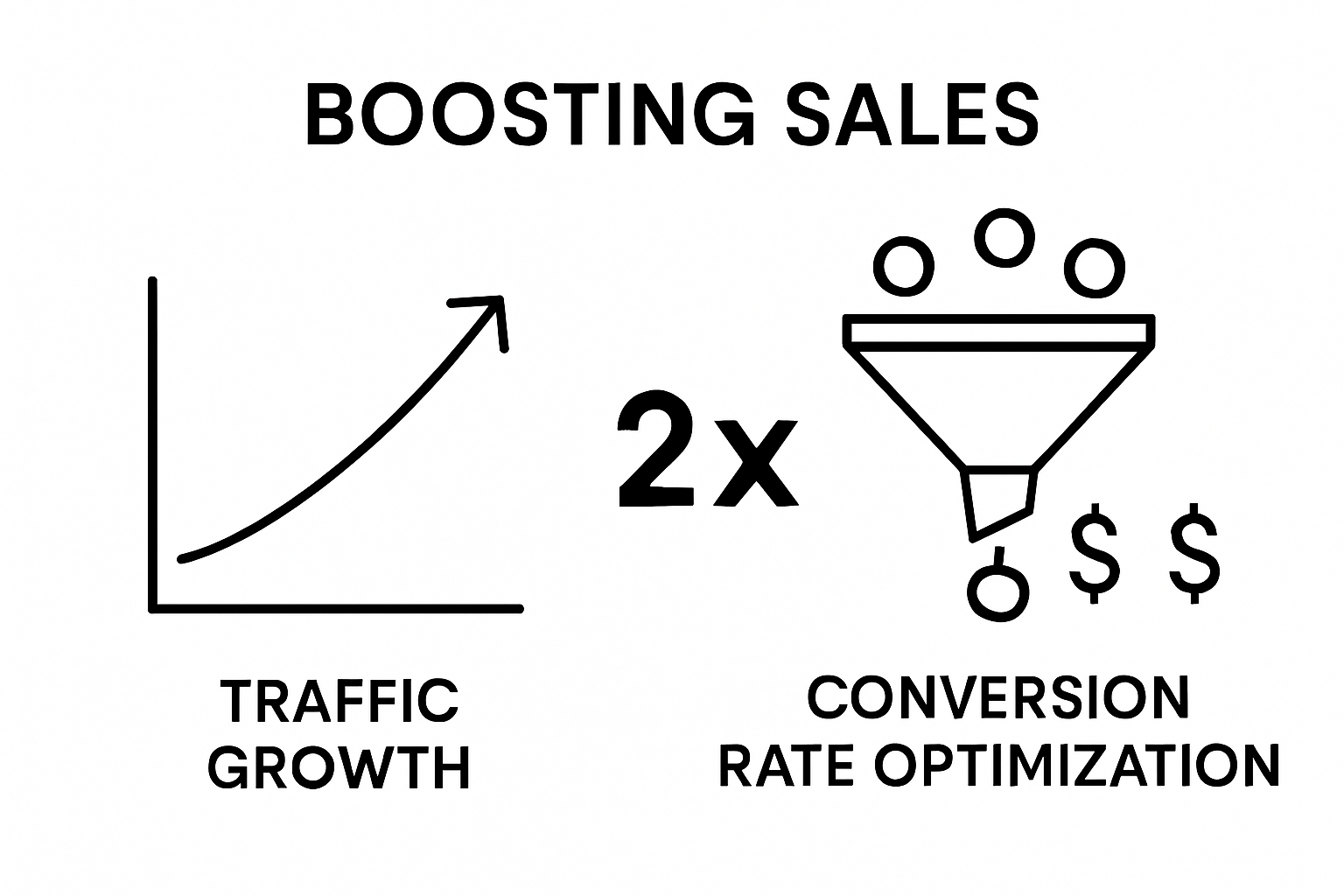
- Gain deeper insights into customer behavior and preferences
Successful conversion rate optimization goes beyond simple design tweaks. It requires a comprehensive approach that analyzes user interactions, identifies potential barriers to conversion, and implements data-driven improvements. Learn more about advanced ecommerce conversion strategies to unlock your store’s full potential.
By systematically testing and refining your website elements customer journey mapping, and user experience, you can create a more compelling online environment that naturally guides visitors toward making a purchase. The goal is not just to attract traffic, but to transform that traffic into meaningful business results.
The Science Behind Conversion Rates: Understanding User Behavior
User behavior is a complex psychological landscape that drives online purchasing decisions. Understanding the intricate mechanisms that influence customer interactions requires a deep dive into cognitive processes, emotional triggers, and decision-making patterns that occur during the online shopping experience.
Psychological Triggers in Online Purchasing
Research from the PLOS ONE journal reveals that online consumer decisions are not purely rational but heavily influenced by psychological and emotional factors. These triggers include:
- Perceived trust in the website and brand
- Ease of navigation and user experience
- Visual aesthetics and design coherence
- Social proof and customer testimonials
- Perceived value and comparative pricing
Cognitive Decision Making in E-commerce
Customers do not make purchasing decisions in a linear manner. Their journey involves multiple cognitive processes that assess risk, evaluate benefits, and manage emotional responses. Cognitive load plays a significant role in determining whether a potential customer completes a transaction or abandons their cart.
Our brains are wired to seek efficiency and minimize cognitive effort. This means that the more complicated or confusing your website becomes, the less likely users are to convert. Read more about sales data insights that drive marketing strategies to refine your understanding of these complex user behaviors.
Successful conversion rate optimization demands a nuanced approach that goes beyond surface-level design changes. It requires understanding the subtle psychological mechanisms that guide user interactions, transforming your website from a mere transactional platform into an intuitive, trust-building environment that naturally guides customers toward making a purchase.
Key Components of Conversion Rate Optimization Strategies
Converting website visitors into customers requires a strategic, multifaceted approach that goes beyond simple design modifications. Successful conversion rate optimization (CRO) demands a comprehensive understanding of multiple interconnected components that work together to create a seamless user experience.
Data Collection and Analysis
Research from the University of Nebraska-Lincoln highlights the critical importance of systematic data collection in understanding user behavior. Effective CRO strategies rely on robust data gathering mechanisms that provide insights into:
- User navigation patterns
- Click-through rates
- Time spent on specific pages
- Bounce rates
- Conversion funnel drop-off points
Strategic Testing and Optimization
Continuous testing is the backbone of effective conversion rate optimization.
A/B testing allows marketers to compare different versions of web elements to determine which configuration most effectively drives user actions. This methodical approach enables data-driven decision making, removing guesswork from website improvements.
Explore our advanced growth marketing strategies to understand how systematic testing can transform your online performance. The goal is not just to make changes, but to make informed changes that demonstrably improve user experience and conversion rates.
Successful CRO is an iterative process that requires ongoing analysis, testing, and refinement.
Here is a table that organizes the main components of effective Conversion Rate Optimization (CRO) strategies, helping clarify each element’s role in optimizing user experiences and driving conversions.
| CRO Component | Key Focus | Example Data or Practice |
|---|---|---|
| Data Collection & Analysis | Understanding how users interact with the site | Navigation patterns, bounce rates, funnel drop-off |
| A/B Testing | Systematically comparing variations to identify best performers | Testing checkout layouts, headlines, CTA buttons |
| User Experience Design | Enhancing usability and reducing friction | Simplifying forms, mobile responsiveness |
| Psychological Insights | Leveraging behavioral triggers | Trust badges, persuasive messaging |
| Iterative Optimization | Continuously refining strategies based on results | Regularly updating site elements, performance reviews |
Practical Applications of Conversion Rate Optimization in E-commerce
Converting website visitors into paying customers requires strategic implementation of conversion rate optimization (CRO) techniques tailored specifically to e-commerce environments. Understanding how to apply these strategies effectively can transform your online store from a simple digital storefront into a powerful revenue generation platform.
Website Design and User Experience Optimization
Research from Columbia University emphasizes the critical role of design in driving conversions. Practical CRO applications in website design include:
- Creating clear and compelling product descriptions
- Implementing intuitive navigation structures
- Ensuring mobile responsiveness
- Using high-quality, professional product images
- Designing streamlined checkout processes
Targeted Conversion Strategies
E-commerce conversion optimization goes beyond aesthetic improvements. Strategic interventions can significantly impact user behavior and purchasing decisions. These interventions include personalized product recommendations, transparent pricing, trust signals like security badges, and simplified payment options.
Learn about effective revenue maximization techniques to complement your conversion optimization efforts. By understanding the nuanced relationship between design, user experience, and psychological purchasing triggers, you can create a more compelling online shopping environment.
Successful e-commerce conversion rate optimization requires continuous testing, analysis, and refinement. The most effective strategies adapt dynamically to changing user behaviors, market trends, and technological advancements, ensuring your online store remains competitive and user-friendly.
Real-World Examples: Success Stories and Lessons Learned
Converting theoretical conversion rate optimization (CRO) strategies into tangible results requires understanding how successful businesses have transformed their online performance through data-driven approaches. Real-world examples demonstrate the profound impact of systematic CRO implementation across different e-commerce environments.
Strategic Transformation Case Studies
Successful CRO implementations reveal consistent patterns of strategic thinking and methodical execution. Companies that achieve significant conversion rate improvements typically:
- Prioritize user experience over aesthetic design
- Conduct rigorous A/B testing
- Develop deep understanding of customer psychological triggers
- Implement incremental, measurable changes
- Maintain continuous optimization processes
Performance Optimization Insights
Quantitative improvements often emerge from seemingly minor modifications. Businesses that systematically analyze user behavior and implement targeted interventions can experience dramatic shifts in conversion rates. For instance, reducing checkout form fields, improving page load speeds, and providing clear navigation paths can yield substantial revenue increases.
Explore advanced market basket analytics strategies to understand how data-driven insights can transform your conversion optimization approach. The most successful e-commerce businesses view CRO not as a one-time project, but as an ongoing commitment to understanding and responding to customer behavior.

Ultimately, conversion rate optimization is a continuous journey of learning, testing, and adapting. By studying successful implementations and embracing a data-driven mindset, businesses can create more engaging, user-friendly online experiences that naturally guide customers toward making purchases.
Elevate Your CRO Results With Data-Driven Product Insights
You have learned that successful conversion rate optimization (CRO) is not about guessing. It depends on understanding user behavior, analyzing data, and implementing evidence-based changes to guide more visitors toward completing purchases. But what if much of your store’s revenue is hiding in plain sight—within product relationships you have not uncovered yet?
If you want to maximize results from your CRO strategies, your next move should be harnessing the power of advanced data analysis. By using APUS NEST, you can easily upload your sales data, instantly reveal profitable product pairings, and receive actionable recommendations to boost your average order value. Discover how market basket analytics can supercharge your cross-sell approach. Our AI pinpoints which combinations entice more customers to buy, taking guesswork out of your optimization process.
Feeling ready to put your CRO theory into profitable practice? Experience a free report from APUS NEST today. See for yourself how smarter, data-backed decisions can unlock your store’s hidden conversion potential and accelerate your path to higher sales. Don’t wait—your next growth opportunity might be just one insight away.
Frequently Asked Questions
What is Conversion Rate Optimization (CRO)?
Conversion Rate Optimization (CRO) is a process aimed at increasing the percentage of website visitors who complete desired actions, such as making a purchase or signing up for a newsletter. It involves improving user experience and website performance through systematic changes.
Why is CRO important for online businesses?
CRO is vital because it maximizes returns on existing marketing investments, enhances user experience, increases revenue without additional advertising costs, and provides deeper insights into customer behavior, ultimately leading to improved profitability.
What are some psychological triggers that influence online purchasing decisions?
Psychological triggers that affect online purchases include perceived trust in the website, ease of navigation, attractive design, social proof (like customer reviews), and the perceived value of products compared to their pricing.
How can I implement effective testing strategies for CRO?
Effective testing strategies for CRO include A/B testing different versions of web elements to determine which configurations drive more user actions. Continuous analysis and data-driven decision-making are crucial for making informed changes that enhance conversion rates.
Recommended
- Understanding Ecommerce Conversion: Boosting Online Sales - ApusNest Blog | ApusNest
- Understanding the Role of Sales Data in Marketing - ApusNest Blog | ApusNest
- 7 Proven Ways to Boost Shopify Sales in 2025 - ApusNest Blog | ApusNest
- 7 Effective Ways to Maximize Revenue in E-commerce - ApusNest Blog | ApusNest
- Converting Website Traffic: Proven Strategies for 2025
