
Marketing technology is advancing faster than ever, making it difficult for even seasoned professionals to stay ahead in 2025. With an overwhelming array of marketing tools and strategies at your fingertips, selecting the right combination can feel daunting.
Choosing wisely is crucial for driving business growth and gaining a real edge over competitors. This guide offers actionable insights, expert guidance, and cutting-edge approaches tailored for the year ahead.
Use this resource to optimize your marketing stack and strategy. Inside, you will find a comprehensive roadmap covering core tool categories, proven strategic frameworks, AI and automation, data-driven marketing, integration best practices, and future trends.
The Evolving Marketing Landscape in 2025
The marketing landscape in 2025 is rapidly transforming, driven by shifting consumer expectations, regulatory changes, and advances in technology. Companies now face an unprecedented array of marketing tools and strategies, each promising to deliver a competitive edge. Navigating this complex environment requires a clear understanding of key trends and the ability to adapt quickly.
Key Trends Shaping Marketing
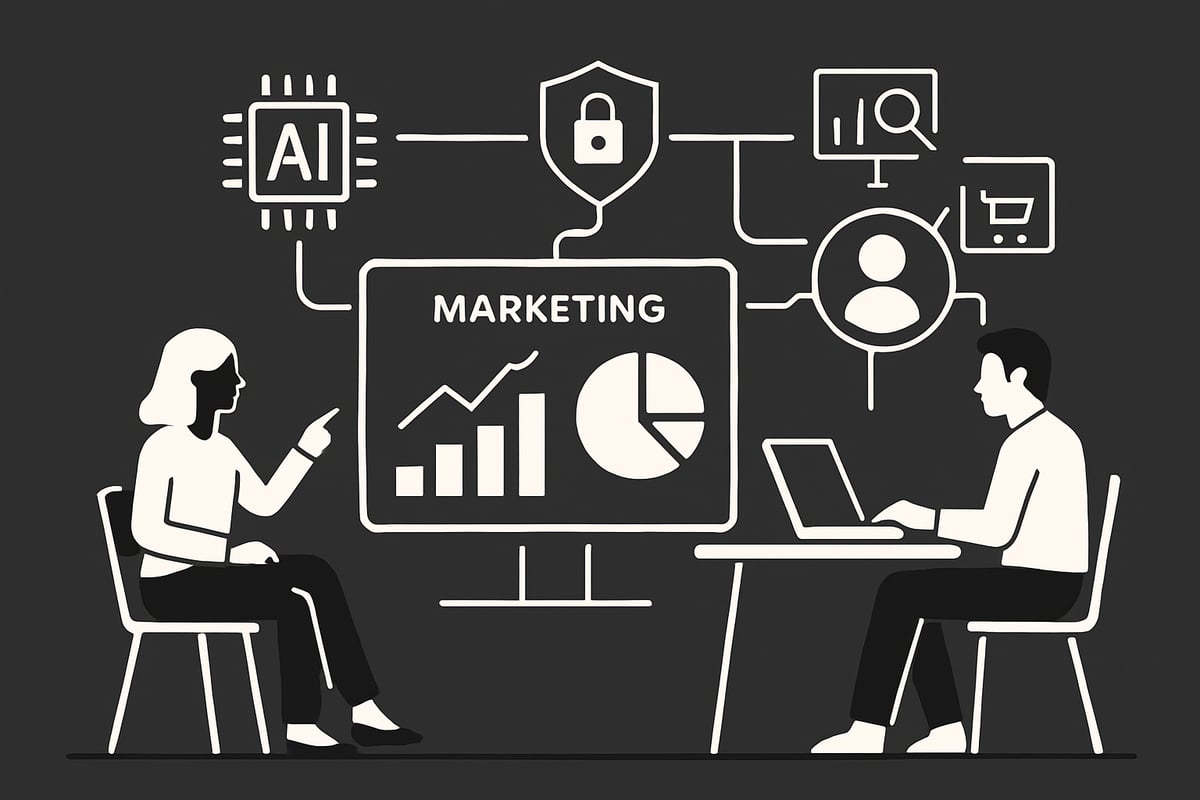
In 2025, privacy-first marketing is at the forefront. Global regulations like GDPR and CCPA have redefined how businesses collect and use data. As a result, marketers focus on first-party data and consent-driven personalization to build trust. Omnichannel and hybrid customer experiences are becoming the norm, with brands expected to deliver seamless interactions across digital and physical channels.
Customer-centric, value-driven messaging is now essential. In fact, 73% of consumers expect brands to understand their unique needs (Salesforce, 2024). To meet these demands, businesses must choose marketing tools and strategies that prioritize personalization, compliance, and transparency.
Impact of AI and Automation
Artificial intelligence is transforming the way organizations use marketing tools and strategies. AI enhances targeting and segmentation, enabling campaigns to reach the right audience at the right moment. Machine learning powers content creation, from automated ad copy to dynamic pricing models, while chatbots and conversational AI deliver real-time engagement.
Marketers are rapidly adopting AI, with 61% now using it for personalization (Statista, 2024). These technologies streamline workflows, optimize budgets, and help marketers stay agile in a fast-changing environment.
The Proliferation of Marketing Tools
The explosion of marketing tools and strategies has led to a crowded landscape. As of 2024, over 11,000 marketing technology solutions are available (MarTech 2024), making it difficult to identify the best fit. Tool fatigue and integration challenges are common, especially for enterprises using as many as 91 marketing cloud services (ChiefMartec, 2024).
Selecting interoperable and scalable platforms is critical. A strategic approach ensures that marketing tools and strategies work together seamlessly, reducing complexity and maximizing ROI.
The Need for Strategic Alignment
Aligning marketing tools and strategies with business goals is more important than ever. Companies must build agile, cross-functional teams and foster a culture of continuous learning to keep up with evolving demands. Investing in technology is only effective when paired with a clear strategic vision.
According to McKinsey (2024), organizations with strong tech-strategy alignment grow revenue 2.5x faster. For actionable frameworks and examples, explore our Growth marketing strategy guide, which details how to select and implement the right mix of tools for sustainable growth.
Core Categories of Marketing Tools for 2025
Navigating the modern landscape of marketing tools and strategies requires a clear understanding of the essential categories that drive business growth. In 2025, the right mix of platforms is more critical than ever for managing data, automating campaigns, and personalizing customer experiences. Let’s explore the six core categories shaping the future of marketing.
Customer Relationship Management (CRM) Platforms
Customer relationship management platforms are at the heart of effective marketing tools and strategies. These platforms centralize customer data, track interactions, and provide a unified view of each contact.
Popular CRMs like Salesforce, HubSpot, and Zoho CRM empower teams to manage sales pipelines, segment audiences, and execute retention campaigns.
- Centralizes all customer communications
- Enables detailed segmentation and targeting
- Supports sales and marketing alignment
CRM adoption has been shown to increase sales productivity by 29 percent, making it an indispensable part of any modern marketing stack.
Marketing Automation Suites
Marketing automation suites streamline repetitive tasks and enable scalable, personalized communication. As marketing tools and strategies become more complex, automation platforms like Marketo, Mailchimp, and ActiveCampaign automate email, SMS, and omnichannel campaigns.
These tools nurture leads, trigger messages based on user behavior, and automate workflows for greater efficiency.
Key benefits:
- Consistent lead nurturing
- Automated follow-ups and alerts
- Workflow optimization
Automation can boost conversion rates by 14.5 percent, directly impacting revenue growth.
Content Creation & Management Tools
Content remains the cornerstone of successful marketing tools and strategies. Content management systems such as WordPress, Contentful, and Webflow make it easy to plan, publish, and optimize content across channels.
AI-powered solutions like Jasper and Copy.ai accelerate content production while maintaining quality.
| CMS Tools | AI Content Tools |
|---|---|
| WordPress | Jasper |
| Contentful | Copy.ai |
| Webflow |
Seventy percent of marketers now prioritize content quality over quantity to engage and convert audiences.
Social Media Management & Listening Tools
Social media platforms demand a dedicated approach within your marketing tools and strategies. Tools like Hootsuite, Sprout Social, and Buffer allow for seamless scheduling, analytics, and engagement.
Social listening solutions such as Brandwatch and Mention help companies monitor brand reputation and respond quickly to customer feedback.
- Schedule posts across networks
- Analyze engagement metrics
- Monitor brand sentiment in real time
Companies leveraging social listening report a 24 percent increase in customer satisfaction.
Data Analytics & Attribution Platforms
Data analytics and attribution are crucial for understanding the impact of marketing tools and strategies. Platforms like Google Analytics 4, Adobe Analytics, Tableau, and Looker provide real-time dashboards and multi-touch attribution to track campaign performance.
For a deeper dive into essential analytics solutions, explore this Marketing report tools overview.
- Attribute conversions to the right channels
- Visualize customer journeys
- Measure ROI with precision
Data-driven organizations are 23 times more likely to acquire new customers, highlighting the power of analytics.
Personalization & Experience Optimization Tools
Personalization sits at the core of innovative marketing tools and strategies. On-site personalization platforms such as Dynamic Yield and Optimizely, along with robust A/B testing tools, help brands deliver tailored experiences across web, mobile, and email.
- Dynamic content and recommendations
- A/B and multivariate testing for optimization
- Enhanced user experience and engagement
Brands that invest in personalization see a 20 percent increase in sales, proving that relevance drives results.
Building a Winning Marketing Strategy: Step-by-Step Framework
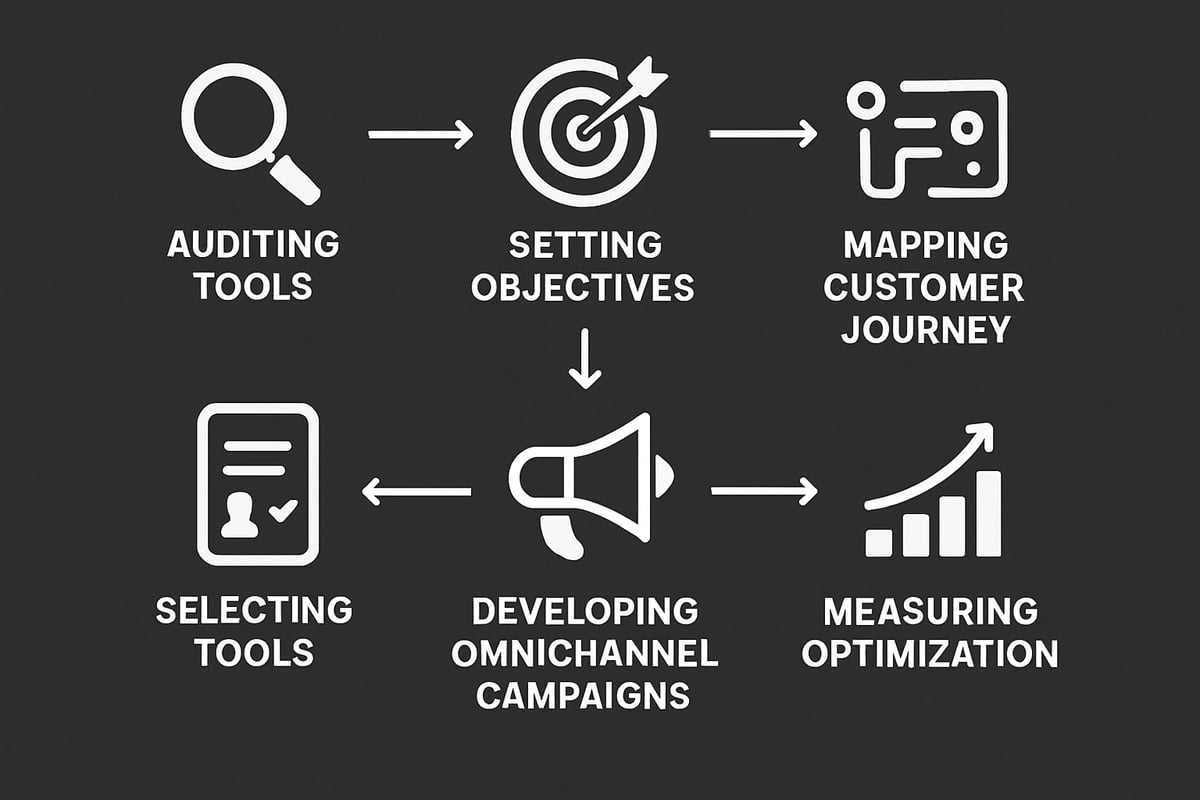
Crafting a successful marketing approach in 2025 requires more than just collecting new tools. Marketers need a clear, actionable framework to select, implement, and optimize the right marketing tools and strategies. By following this step-by-step process, you can align technology with business growth, boost efficiency, and drive results.
Step 1: Audit Existing Tools and Strategies
Begin by taking stock of your current marketing tools and strategies. List every platform, integration, and process in use. Identify overlaps, underutilized tools, and any gaps that hinder your objectives.
- Create a centralized inventory.
- Evaluate each tool's usage and ROI.
- Consult stakeholders for feedback.
This audit helps uncover where your marketing tools and strategies may be wasting budget or creating inefficiencies. According to Gartner, 47% of marketers report tool overlap as a major source of resource drain. By clarifying your stack, you lay the groundwork for a more effective approach.
Step 2: Define Clear Objectives and KPIs
Next, set measurable goals for your marketing tools and strategies. Use the SMART framework: Specific, Measurable, Achievable, Relevant, and Time-bound objectives. Define KPIs for lead generation, brand awareness, customer retention, or any priority area.
- Tie each tool to a specific goal.
- Establish benchmarks for performance.
- Review objectives with your team.
Companies that connect marketing tools and strategies to clear KPIs are three times more likely to achieve their targets, as highlighted by HubSpot. This clarity ensures every investment drives toward tangible business outcomes.
Step 3: Map the Customer Journey
Visualize your customer’s path from initial awareness to post-purchase engagement. Plot every touchpoint where marketing tools and strategies can influence experience, automate responses, or personalize content.
- Identify awareness, consideration, and decision stages.
- Highlight pain points and opportunities.
- Look for automation or personalization gaps.
Journey mapping enables you to optimize each stage, ensuring your marketing tools and strategies deliver value at the right moments. Forrester found that this practice can boost campaign effectiveness by 30%.
Step 4: Select and Integrate Essential Tools
With objectives and journey maps in hand, prioritize marketing tools and strategies that fill gaps and scale with your business. Focus on interoperability—choose tools with robust APIs or native integrations.
- Shortlist platforms that solve core needs.
- Avoid redundant or siloed solutions.
- Plan seamless data flow between tools.
Integrated marketing tools and strategies can reduce operational costs by 22%, as reported by Ascend2. A streamlined stack drives efficiency and better collaboration across teams.
Step 5: Develop Omnichannel Campaigns
Coordinate your messaging across every relevant channel—email, social, web, and even offline. Use automation features within your marketing tools and strategies to ensure timely, consistent outreach.
- Align creative and messaging across platforms.
- Automate triggers based on customer behavior.
- Monitor cross-channel performance.
Omnichannel marketing tools and strategies can yield purchase rates nearly three times higher, according to Omnisend. By unifying campaigns, you maximize engagement and conversion opportunities.
Step 6: Measure, Optimize, and Scale
Finally, implement analytics to monitor all aspects of your marketing tools and strategies in real time. Track KPIs, test new tactics, and scale what works. Continuous improvement is key.
- Set up dashboards for core metrics.
- Run A/B and multivariate tests.
- Iterate on high-performing strategies.
For deeper insight into campaign performance, explore data-driven campaign optimization techniques that leverage analytics for smarter decisions. Deloitte reports that ongoing optimization can increase ROI by up to 20%, making this step vital for sustained growth.
The Role of AI and Machine Learning in Modern Marketing
Artificial intelligence and machine learning are fundamentally reshaping how organizations approach marketing tools and strategies. In 2025, AI capabilities are not just an advantage, they are a necessity for brands seeking to engage customers at scale and deliver measurable results.

AI-Powered Personalization and Segmentation
Personalization is at the heart of modern marketing tools and strategies, and AI is the driving force behind it. By analyzing first-party data and behavioral signals, AI enables hyper-segmentation, ensuring each customer receives tailored experiences.
Dynamic content recommendations, individualized product suggestions, and automated segmentation create a competitive edge. Brands can now predict customer intent and deliver messaging in real time. According to Salesforce, AI-driven personalization increases engagement by 54 percent.
As AI transforms targeting and segmentation, marketers must continuously adapt their marketing tools and strategies to stay ahead.
Automated Content Creation and Curation
AI-powered tools are revolutionizing content creation for marketing teams. Automated writing assistants, video generators, and design platforms accelerate production without compromising quality.
These innovations allow marketers to scale campaigns across channels, delivering consistent and relevant messaging. With 38 percent of marketers now using AI for content creation, efficiency gains are significant.
For a deeper look at how emerging AI technologies are transforming marketing tools and strategies by 2025, explore AI Transformations in Marketing by 2025.
Predictive Analytics and Customer Insights
Predictive analytics has become a cornerstone of effective marketing tools and strategies. AI models process vast amounts of data to forecast trends, identify high-value segments, and estimate customer lifetime value.
These insights empower marketers to make data-driven decisions, optimize campaigns, and anticipate customer needs. Companies leveraging AI for predictive analytics see a 21 percent improvement in retention rates, according to Forbes.
Integrating predictive analytics into marketing tools and strategies enables brands to stay agile in a rapidly changing market.
Conversational AI and Customer Support
Conversational AI is transforming how businesses provide support and engage with customers. Chatbots, voice assistants, and automated messaging platforms now resolve up to 80 percent of routine queries, as reported by IBM.
These technologies enhance customer experience by offering 24/7, personalized assistance across multiple channels. As a result, marketing tools and strategies increasingly include conversational AI to streamline support and boost satisfaction.
Organizations adopting these solutions free up valuable human resources for higher-level, strategic work, further optimizing their marketing tools and strategies.
Data-Driven Marketing: Harnessing Analytics for Better Results
Unlocking the full potential of your marketing tools and strategies requires a data-driven mindset. In 2025, analytics are the engine driving smarter decisions, sharper campaigns, and sustainable growth. As privacy standards evolve and digital touchpoints multiply, brands must harness actionable data to stay ahead. Each element of your stack, from collection to compliance, plays a pivotal role in shaping business outcomes.
Importance of First-Party Data
Collecting first-party data is now the cornerstone of effective marketing tools and strategies. With third-party cookies fading, marketers are prioritizing direct data from customer interactions. This approach enhances personalization, ensures compliance, and delivers more relevant experiences.
First-party data, such as purchase history and website activity, empowers brands to build accurate profiles. It allows for tailored messaging and offers, increasing engagement and conversion rates. According to eMarketer, 87% of marketers are focusing on first-party data strategies to future-proof their efforts.
To maximize impact, ensure your CRM, automation, and analytics platforms are seamlessly integrated. This unified view of the customer journey is vital for optimizing every touchpoint.
Multi-Touch Attribution and ROI Tracking
Understanding the effectiveness of your marketing tools and strategies hinges on robust attribution models. Multi-touch attribution assigns value to each interaction along the customer journey, helping identify which channels truly drive results.
Using solutions like Google Analytics 4 or Adobe Analytics, marketers can capture data across touchpoints and link actions to outcomes. This granular insight empowers data-driven budget allocation and campaign refinement. As highlighted by AI Redefining Marketing Today and Tomorrow, advanced analytics are transforming how organizations assess ROI and optimize strategy.
Multi-touch attribution is more than a metric, it is a guide for continuous improvement. Companies leveraging these insights see up to a 30% increase in marketing ROI.
Real-Time Analytics and Dashboards
Real-time analytics are revolutionizing how teams use marketing tools and strategies. Immediate access to performance data enables agile decision-making and rapid response to market changes. Dashboards provide a visual summary of KPIs, campaign effectiveness, and customer behaviors.
With platforms like Tableau and Looker, marketers can monitor trends and spot issues as they arise. This proactive approach reduces wasted spend and ensures resources are directed where they matter most.
Real-time insights also support personalization efforts, allowing for on-the-fly adjustments that boost engagement. Domo reports that real-time analytics can reduce campaign waste by 18%, demonstrating the tangible benefits of timely data.
Data Privacy, Security, and Compliance
As data collection intensifies, so does the responsibility to protect and respect customer information. Successful marketing tools and strategies must prioritize privacy, security, and regulatory adherence.
Compliance with frameworks like GDPR and CCPA is not optional, it is essential for maintaining trust. Transparent data practices foster loyalty, with PwC noting that 65% of consumers prefer brands with clear policies.
Regular audits, encryption, and clear consent processes are critical. By embedding privacy into every layer of your stack, you safeguard your reputation and build lasting relationships.
Quick Reference Table: Key Data-Driven Marketing Insights
| Focus Area | Statistic/Insight | Source |
|---|---|---|
| First-Party Data | 87% prioritize first-party strategies | eMarketer |
| Multi-Touch Attribution | 30% increase in ROI | |
| Real-Time Analytics | 18% reduction in campaign waste | Domo |
| Data Privacy & Trust | 65% prefer brands with clear policies | PwC |
Integration, Automation, and Future-Proofing Your Marketing Stack
In today's marketing landscape, the sheer volume of marketing tools and strategies can create complexity and inefficiency. Businesses must focus on seamless integration, intelligent automation, and adaptability to remain competitive. Let's break down how you can align your marketing stack for lasting success.
Seamless Tool Integration for Efficiency
Efficient marketing tools and strategies depend on how well your systems connect. APIs, middleware, and native integrations are essential for synchronizing data across platforms. Without integration, data silos can form, leading to workflow bottlenecks and missed opportunities.
Consider this comparison:
| Integration Method | Pros | Cons |
|---|---|---|
| Native Connectors | Easy setup, reliable | Limited flexibility |
| APIs | Flexible, scalable | Requires dev work |
| Middleware | Bridges diverse systems | Added cost |
Integrated marketing tools and strategies improve productivity, streamline operations, and enable teams to focus on high-impact work.
Automating Routine Marketing Tasks
Automation is transforming how teams deploy marketing tools and strategies. Workflow automation handles repetitive jobs like lead scoring, follow-ups, and campaign reporting, freeing marketers for strategic tasks.
Modern platforms can automate:
- Lead nurturing sequences
- Multi-channel outreach
- Performance reporting
According to the AI in ecommerce: store owner guide, leveraging AI-powered automation allows businesses to scale personalization and efficiency without overwhelming staff. Adopting these marketing tools and strategies helps teams save time and increase impact.
Scalability and Flexibility in Tool Selection
As your business evolves, your marketing tools and strategies must adapt. Scalable solutions grow with your needs, while flexible platforms prevent vendor lock-in and simplify upgrades.
Key considerations when choosing tools:
- Modular architecture for easy expansion
- Compatibility with current and future systems
- Clear upgrade and migration paths
By prioritizing scalability and flexibility, you future-proof your marketing tools and strategies and avoid costly tech debt as your organization grows.
Preparing for Emerging Trends and Technologies
Future-proofing your marketing stack means staying agile and ready for innovation. Emerging channels like AR, VR, voice, and Web3 are reshaping customer engagement. Investing in ongoing education and experimentation is crucial for keeping your marketing tools and strategies ahead of the curve.
As highlighted in AI's Role in Marketing by 2025, the next wave of AI-driven advancements will demand continuous learning and rapid adaptation. Marketers who embrace new technologies will lead the industry in delivering value and relevance.
