

Over half of all american online retailers are already experimenting with artificial intelligence to analyze sales and predict customer trends. In a crowded market where consumer choices shift overnight, understanding how AI transforms raw data into smart decisions is becoming crucial for success. This article will clarify what sets AI-powered e-commerce analytics apart so you can see exactly how these advanced tools can give your business a sharper edge.
Table of Contents
- Defining AI In Ecommerce Analytics
- Types Of AI Techniques In Ecommerce
- How Market Basket Analysis Works
- AI-Powered Insights For Product Pairing
- Risks, Costs, And Best Practices
Key Takeaways
| Point | Details |
|---|---|
| AI Enhances E-commerce Analytics | Artificial Intelligence transforms raw sales data into actionable insights, optimizing online retail performance through predictive models and strategic recommendations. |
| Diverse AI Techniques Improve Operations | Techniques such as machine learning, natural language processing, and computer vision enable businesses to analyze customer behavior and enhance the shopping experience. |
| Market Basket Analysis Uncovers Insights | This data mining technique reveals hidden relationships between products, allowing businesses to create targeted marketing strategies based on purchasing patterns. |
| Effective Implementation Mitigates Risks | A strategic approach is essential in AI analytics, balancing investments while addressing data quality and algorithmic bias to drive meaningful business transformation. |
Defining AI in Ecommerce Analytics
Artificial Intelligence (AI) in e-commerce analytics represents a revolutionary approach to understanding and optimizing online retail performance through advanced computational techniques. At its core, AI transforms raw sales data into intelligent, actionable insights by leveraging sophisticated algorithms that can analyze complex patterns far beyond traditional human capabilities.
Through advanced machine learning techniques, AI can process massive volumes of transactional, behavioral, and customer interaction data to generate predictive models and strategic recommendations. These models help e-commerce businesses understand nuanced customer preferences, predict purchasing behaviors, and create hyper-personalized shopping experiences. For instance, AI can identify intricate product relationships, segment customer groups with unprecedented precision, and dynamically adjust pricing strategies in real time.
The technical landscape of AI in e-commerce analytics encompasses multiple sophisticated technologies. Natural language processing enables sentiment analysis and chatbot interactions, while machine learning algorithms power recommendation engines and predictive inventory management. Computer vision technologies can even analyze product images to understand visual trends and consumer preferences. These interconnected technologies work seamlessly to transform complex data into strategic business intelligence, empowering online retailers to make data-driven decisions with confidence and accuracy.
Key capabilities of AI in e-commerce analytics include:
- Predictive customer segmentation
- Dynamic pricing optimization
- Personalized product recommendations
- Fraud detection and risk assessment
- Real-time inventory management
- Customer lifetime value prediction
By harnessing these advanced analytical capabilities, e-commerce businesses can unlock unprecedented insights, streamline operations, and create more engaging shopping experiences that drive revenue and customer loyalty.
Types of AI Techniques in Ecommerce
Artificial Intelligence in e-commerce encompasses a diverse range of sophisticated techniques designed to transform online retail operations. These advanced technologies enable businesses to analyze complex data patterns, optimize customer experiences, and drive strategic decision-making with unprecedented precision and efficiency.

Machine learning algorithms represent the foundational technique, empowering e-commerce platforms to process massive datasets and generate intelligent insights. These algorithms can segment customers with remarkable accuracy, predict purchasing behaviors, and create dynamic pricing models that respond in real-time to market fluctuations. By analyzing historical transaction data, machine learning can identify intricate patterns that human analysts might overlook, enabling businesses to develop highly personalized marketing strategies.
Natural language processing (NLP) and computer vision technologies further expand AI’s capabilities in e-commerce. NLP enables advanced sentiment analysis, chatbot interactions, and conversational commerce experiences that can understand and respond to customer queries with human-like comprehension. Computer vision techniques can analyze product images, detect visual trends, and even provide augmented reality shopping experiences that help customers make more informed purchasing decisions.
Key AI techniques in e-commerce include:
- Predictive analytics for customer behavior
- Automated recommendation systems
- Intelligent pricing optimization
- Sentiment analysis and customer feedback processing
- Visual search and image recognition
- Fraud detection and risk assessment
By strategically implementing these AI techniques, e-commerce businesses can create more responsive, intelligent platforms that anticipate customer needs, streamline operations, and ultimately drive higher conversion rates and customer satisfaction.
How Market Basket Analysis Works
Market Basket Analysis is a sophisticated data mining technique that uncovers hidden relationships between products purchased together in a single transaction. By analyzing complex transaction datasets, businesses can gain profound insights into customer purchasing patterns and create strategic recommendations that dramatically improve sales and customer experience.
Recommender systems leverage advanced algorithms to identify associations between products, revealing surprising connections that might not be immediately obvious to human analysts. These systems use techniques like collaborative filtering and content-based analysis to map out intricate purchase patterns. For example, an online retailer might discover that customers who buy running shoes are highly likely to purchase athletic socks or fitness trackers in the same transaction, enabling more targeted marketing and product bundling strategies.
The core mechanics of Market Basket Analysis involve calculating statistical measures like support, confidence, and lift to quantify product relationships. Support indicates how frequently a specific product combination appears, confidence measures the likelihood of purchasing complementary items, and lift reveals whether a product combination occurs more frequently than would be expected by random chance. Generative models further enhance these insights by predicting potential future purchasing behaviors based on historical transaction data.
Key steps in Market Basket Analysis include:
- Collecting and preprocessing transaction data
- Identifying frequent itemsets
- Generating association rules
- Calculating statistical metrics
- Developing targeted marketing strategies
- Continuously refining recommendations
By systematically applying these techniques, e-commerce businesses can transform raw transaction data into powerful strategic insights that optimize product placement, create intelligent cross-sell recommendations, and ultimately drive significant revenue growth.
AI-Powered Insights for Product Pairing
Product pairing represents a sophisticated strategy where artificial intelligence transforms raw transaction data into intelligent, revenue-generating recommendations. By analyzing intricate patterns of customer purchasing behaviors, AI enables e-commerce businesses to create highly personalized and strategically optimized product suggestions that can dramatically increase average order value and customer satisfaction.
Recommender systems leverage advanced machine learning algorithms to uncover nuanced relationships between products that human analysts might overlook. These intelligent systems analyze multiple dimensions of customer data, including previous purchase history, browsing patterns, and contextual interactions to generate precise product recommendations. For instance, an AI system might discover that customers purchasing hiking boots are highly likely to be interested in waterproof socks, outdoor navigation tools, or specialized hiking backpacks.
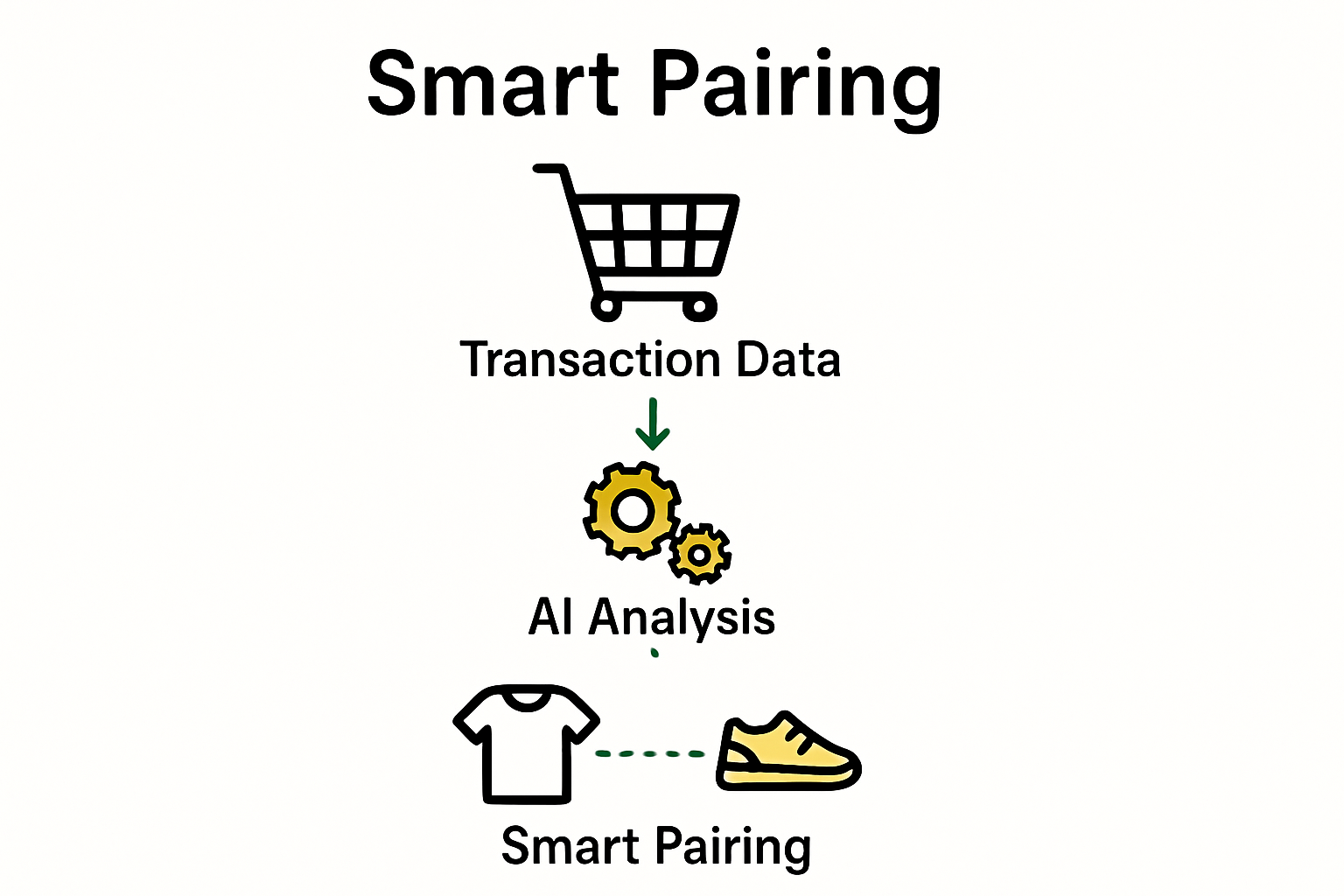
Generative models take product pairing insights to the next level by predicting potential future purchasing behaviors with remarkable accuracy. These advanced AI techniques can generate structured recommendations that go beyond simple statistical correlations, incorporating complex factors like seasonal trends, emerging customer preferences, and contextual purchasing patterns. By synthesizing massive datasets, AI can create dynamic, adaptive recommendation strategies that evolve in real-time.
Key capabilities of AI-powered product pairing include:
- Identifying complementary product relationships
- Predicting cross-sell and upsell opportunities
- Personalizing recommendations at individual customer levels
- Analyzing multi-dimensional purchase patterns
- Generating contextually relevant product bundles
- Continuous learning and recommendation refinement
By implementing these sophisticated AI-driven product pairing strategies, e-commerce businesses can transform their approach to customer recommendations, creating more engaging, personalized shopping experiences that drive higher conversion rates and customer loyalty.
Risks, Costs, and Best Practices
Implementing AI analytics in e-commerce requires a strategic approach that carefully balances potential benefits against inherent technological challenges. Business leaders must navigate a complex landscape of technological investments, data privacy considerations, and potential performance limitations while maintaining a clear focus on delivering tangible value to their organization.
Augmented analytics introduces sophisticated challenges related to data quality, model interpretability, and algorithmic bias that e-commerce businesses must proactively address. These systems can produce misleading insights if underlying data is incomplete or poorly structured, potentially leading to misguided strategic decisions. Successful implementation demands rigorous data validation, continuous model monitoring, and a commitment to understanding the nuanced limitations of AI-driven analytical approaches.
AI-driven automation presents significant cost considerations that extend beyond initial technology investments. Organizations must factor in ongoing expenses for data infrastructure, machine learning model training, computational resources, and specialized technical talent. The total cost of ownership includes not just software and hardware investments, but also substantial investments in skills development, change management, and continuous system refinement.
Key best practices for managing AI analytics risks include:
- Conducting thorough data quality assessments
- Implementing robust governance frameworks
- Maintaining human oversight of AI-generated insights
- Regularly auditing algorithmic performance
- Developing transparent model documentation
- Investing in continuous team training
By adopting a measured, strategic approach to AI implementation, e-commerce businesses can mitigate potential risks while unlocking powerful analytical capabilities that drive meaningful business transformation.
Unlock Hidden Revenue with AI-Powered Market Basket Analysis
The Complete Guide to AI in Ecommerce Analytics highlights the challenge of turning massive transaction data into actionable, personalized product pairing and cross-sell strategies. Many e-commerce store owners struggle to identify complementary products and optimize pricing or bundling in real time. This often leads to missed revenue opportunities and less engaging shopping experiences for customers. APUS NEST understands these pain points by leveraging advanced AI techniques such as market basket analysis and generative models to uncover hidden product relationships and deliver clear, data-driven recommendations that increase average order value.
With APUS NEST you can:
- Upload your sales data via CSV or seamless platform integrations like Shopify or WooCommerce
- Receive detailed reports highlighting strategic product pairings and cross-sell opportunities
- Implement personalized recommendations powered by AI without expensive subscriptions or complex tools
Start transforming your ecommerce analytics into tangible growth. Visit APUS NEST today to get your free report and begin unlocking smarter, AI-driven insights that turn transactional data into powerful strategies. Don’t wait to empower your store with clear, actionable AI insights curated just for you.
Frequently Asked Questions
What is AI in e-commerce analytics?
AI in e-commerce analytics refers to the use of artificial intelligence technologies to analyze data and gain insights into online retail performance. This includes transforming raw sales data into actionable insights using machine learning algorithms, which can uncover customer preferences and optimize business strategies.
How does machine learning enhance e-commerce analytics?
Machine learning enhances e-commerce analytics by processing large datasets to identify patterns that humans may overlook. It enables businesses to segment customers, predict purchasing behaviors, adjust pricing dynamically, and create personalized marketing strategies based on historical transaction data.
What are the key capabilities of AI in e-commerce?
Key capabilities of AI in e-commerce include predictive customer segmentation, dynamic pricing optimization, personalized product recommendations, fraud detection, real-time inventory management, and customer lifetime value prediction, all of which improve operational efficiencies and customer experiences.
How does Market Basket Analysis work in e-commerce?
Market Basket Analysis works by examining transaction data to identify associations between products purchased together. It calculates statistical measures like support, confidence, and lift to uncover relationships, enabling retailers to create targeted marketing strategies and optimize product placement.
Recommended
- Why Use AI in E-commerce: Understanding Its Impact - ApusNest Blog | ApusNest
- AI and Ecommerce Guide: Strategies for Success in 2025 - ApusNest Blog | ApusNest
- APUS NEST | Stop Guessing, Start Growing
- The Essential Guide to the State of Ecommerce 2025 - ApusNest Blog | ApusNest
- The Future of Marketing: AI Agencies Leading the Charge - Kadima
